
“The students and mentors always await the most interesting part of the academic year which is the exhibition unit. It is the unit in which each and every concept, attitude, profile and skill can be enhanced. It is a period over eight weeks in which the mentors and student can explore of knowledge with freedom.
Mentors

Ms.Dani
|
Ms.Hana
|
Ms.Rindy
|
Students
Background of the problems
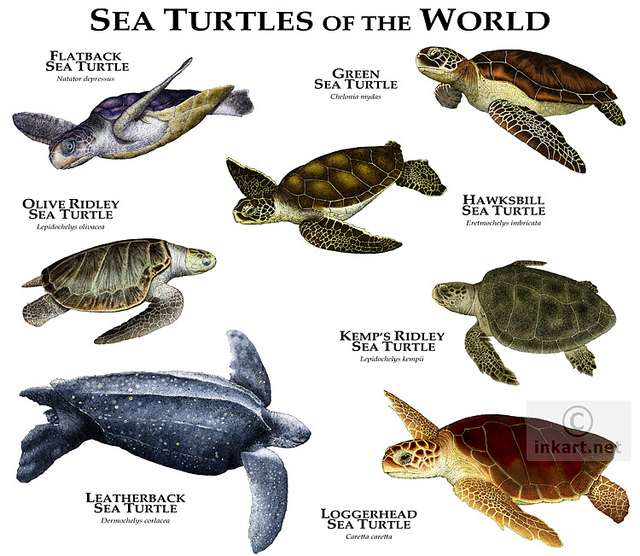
Protection Status
Endangered Species Act: IUCN red list: Critically Endangered »IUCN Red List The Hawksbill, Atlantic Ridley, and Leatherback sea turtles are listed as critically endangered, which indicates that they are facing an extremely high risk of extinction in the wild. The Loggerhead and Green Sea Turtle are listed as endangered, which means they are considered to be facing a very high risk of extinction in the wild. The Pacific or Olive Ridley is listed as vulnerable., which means the probability of its extinction during the next 20 years is at least 10%. |
Introduction to the Cause
Sea turtles have existed on this planet for tens of millions of years, making them some of the oldest species alive today. Along comes mankind, superiority intelligent, civilized, and insolent. We have hunted and killed these magnificent sentient beings, for a mere meal or some material object made from their bodies - or the cash to be made thereby - which we savagely and ignorantly treasured above their life, above their very existence. With nonchalance we have recklessly polluted and developed the delicate ecosystem which is their home.With brutally idle apathy we have turned a blind eye to their tragic plight. Today, because of our ignorance and carelessness, these beautiful creatures are nearing extinction. Today, we must salvage the self-respect of our race. Today, we must save the sea turtles before it is too late. Marine ecosystem-
Endangered sea turtles |
|
It's the year 2016 and sea turtles are still sold as food and products- Sea turtles are nearing extinction
Sadly, local poachers remove eggs and hatch lings from their natural life cycle, selling them for food at the market. People make every effort to rescue these baby turtles from becoming another meal. Aside from human predator, natural predator - animals such as birds, crabs, ants, raccoon, and larger fish, is the main reason for the high mortality rates of hatch lings and why marine biologists believe "1 out of 1000 hatch lings survive to adulthood."
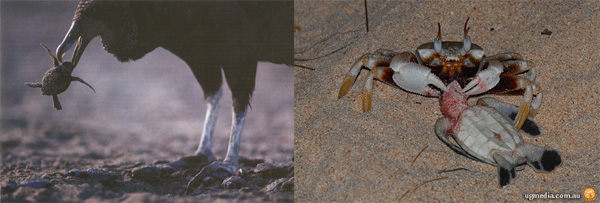
Some people are speaking up for the voiceless, innocent animals
what does OUR inquiry look like?
Exploring,wondering and questioning?
In this activity helps students to define and focus on the issues, they will be dealing with in the unit work. Students started to wonder what they know about sea turtles by writing into KWL (Know, want, learn) chart and continue to mind map central idea "Central Idea: “Biodiversity relies on maintaining the interdependent balance of organisms within systems”. The students explored the facts of sea turtles, types of sea turtles, habitats, ecosystems, diets, and interaction within bio tic and a-bio tic factors. The concepts are guided of students' questions. researching and seeking information
Students will need to obtain more information about the issues of sea turtles. They are going to investigate and identify questions of interest and research. In the first time, Students and mentors have a trip to visit LIPI Oceanography which located in Jl.Raden Saleh 43, Cikini Jakarta Pusat.
Before the trip, the students find out the LIPI oceanography profile to know the background of organization. |
Throughout the week students were engaged in a Exhibition about biodiversity-sea turtle ecosystem.
This experience was valuable for the students as it allowed them to deepen their understanding of the research process and how they will need to apply it throughout the exhibition. It was also beneficial for the teachers because it provided them with information about which areas of the research cycle the students already understand and which are still challenging for them. |
Basic Facts About Sea Turtles
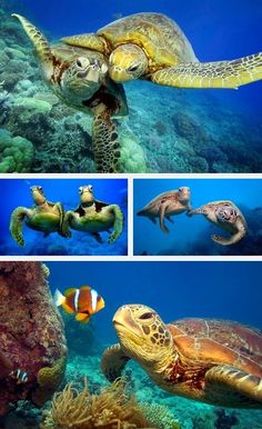
• The first turtle appeared around 245 to 209 million years ago.
• It’s possible that sea turtles may live up to 80 years. • Sea turtles are reptiles. They’re cold-blooded, have scaly skin, and use lungs to breathe. They also have TURTLE a heart and produce eggs. • Many are found in warm seas, especially in shallow, coastal waters, bays, lagoons and estuaries. • Sea turtles, saltwater crocodiles, sea snakes and marine iguanas are the only reptiles left that depend on the sea for survival. • All sea turtles have flippers instead of legs, which makes them graceful and strong in the water and awkward and vulnerable on land. Their hind flippers are used to steer in the water and dig nests in the sand. • They can’t retract their legs or head under their shells. • They don’t have external ear openings. They respond to low frequency sounds and vibrations. • Sea turtles can see well in the water, but are shortsighted otherwise. Visiting to Ragunan zoo, Jakarta
On Tuesday, February 24th. It was not so many people in the morning so it was a good time to observe reptiles. There are at least four types of turtles. They are small eyed soft-shelled turtle (Labi-Labi, Chitra Indica), Red-eared turtle (Kura-kura pipi merah), Amboina box turtle (Kura-kura sawah)and Long-necked turtle (Kura-Kura leher panjang). |
Resources
|

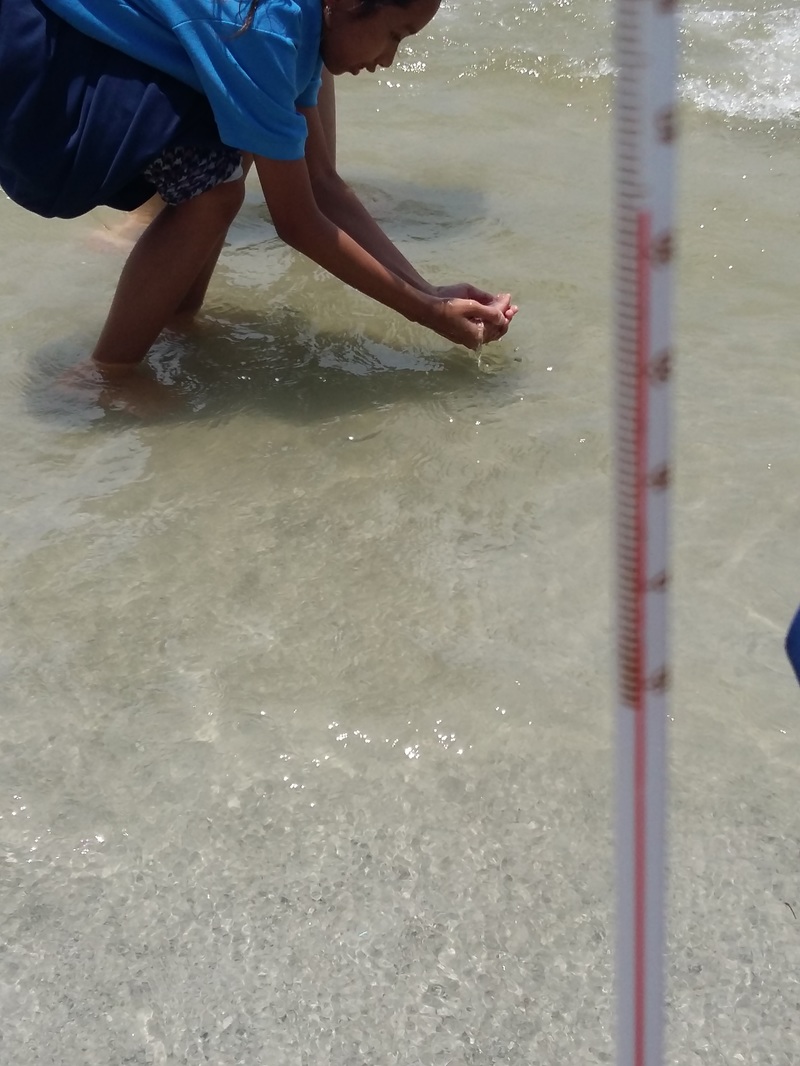
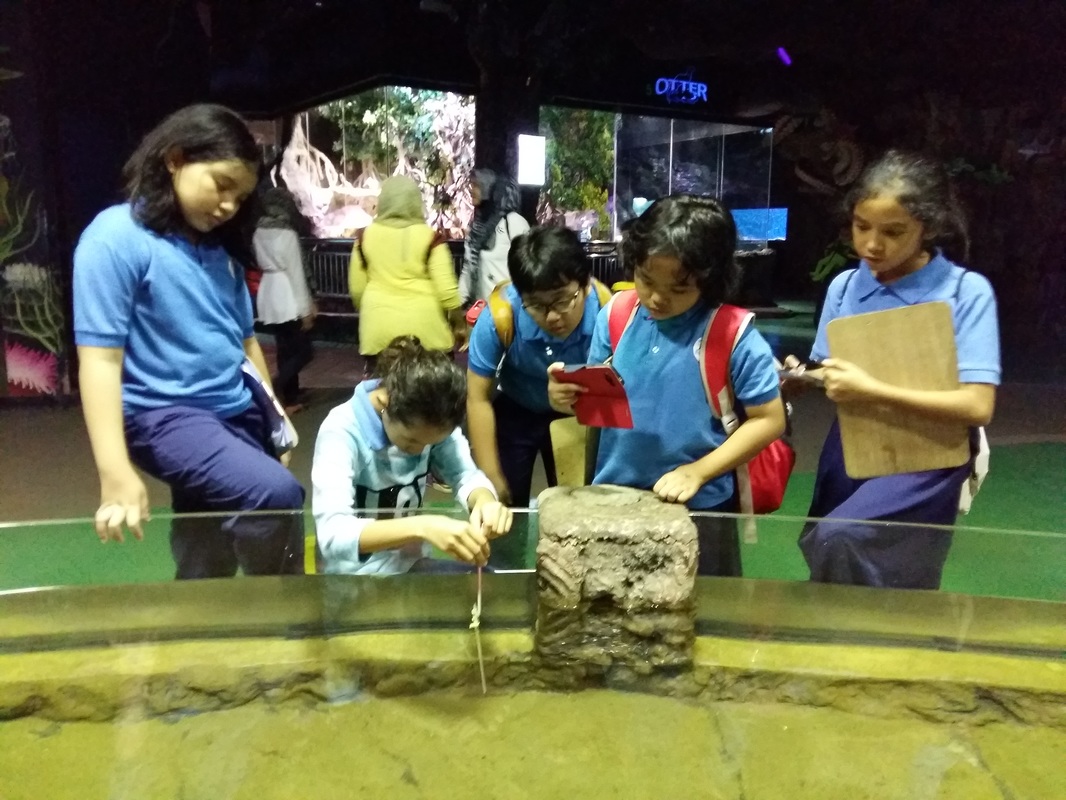
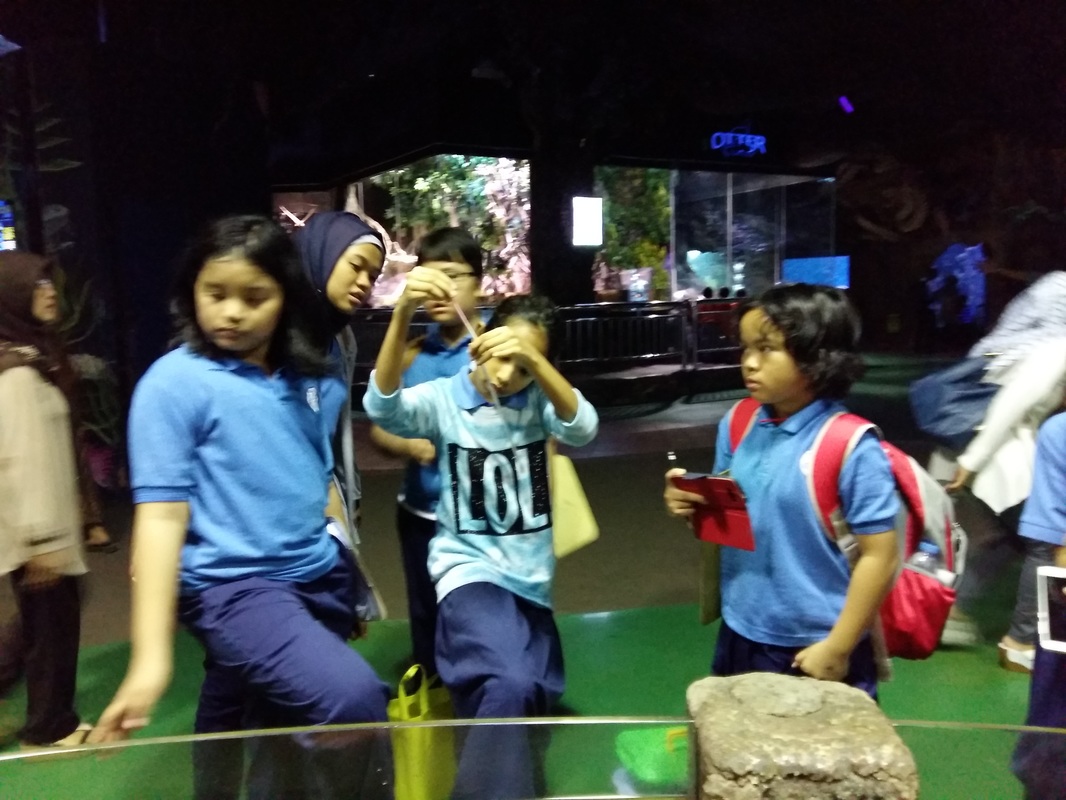
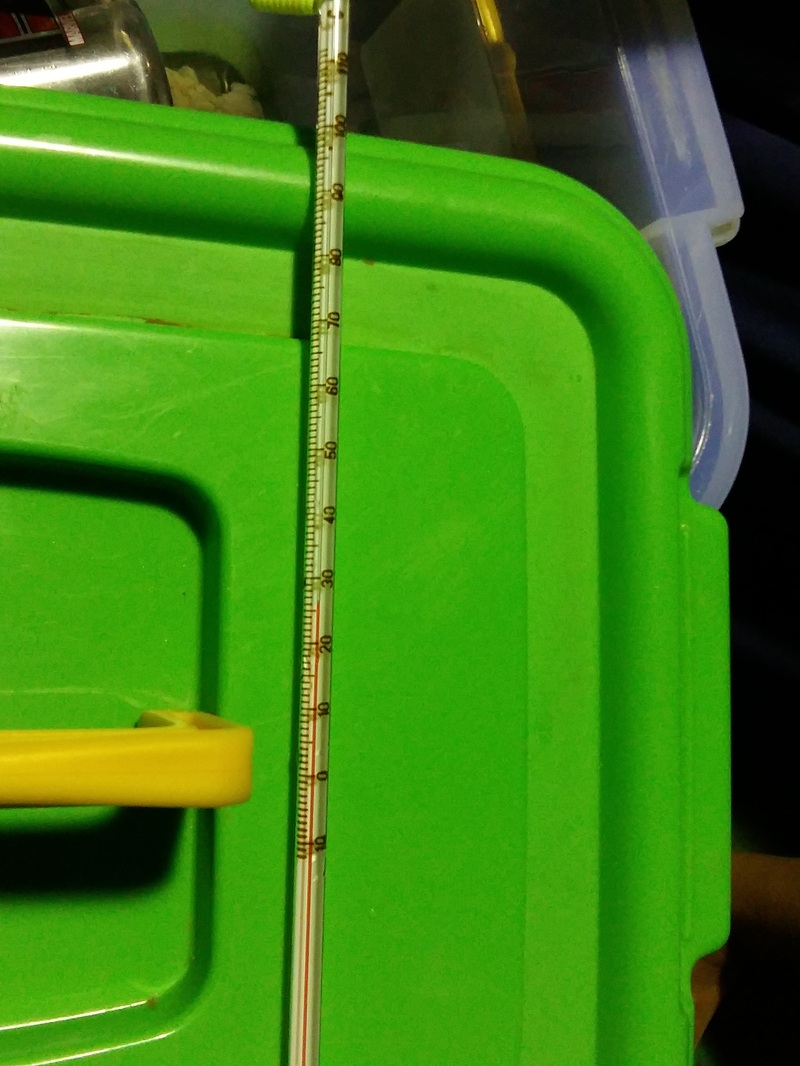
We visited Sea world and Ancol beach on Wednesday, March 2th 2016. The purpose of our field trip was to observed the sea turtle morphology which can identified the species with the evidence as photo taken and also to compare temperature and Ph of salt water between two ecosystems; Marine ecosystem and Artificial ecosystem. Physical conditions influence the habitat in which organism lives these include: Sunlight, temperature, Ph (acidity) Some of the observation we have done through the sea turtles in Sea world as artificial ecosystem: 1. What kinds of species of sea turtles have we found? Hawks bill sea turtle 2. What the condition ? Alive 3.How do you tell a male or female? and at what age? As hatch lings, you can't tell by looking. As adults, males have a much longer tail than females. Sand temperature affects gender: 29.6 degrees Celsius during the middle third of incubation will produce a 50:50 gender ratio. A couple of degrees higher will produce all females and a couple of degrees cooler will produce all males. 4.Measuring sea turtles: Body weight -estimate: 60 kg Curved Carapace length : 58 m Curved Carapace width: 47 cm 5. Human interaction: Feeding, observation 6. What's experiment we have done: Measure temperature of salt water in sea world of sea turtle live: Result: 30 degrees Celsius. In Ancol beach 1. Measure temperature of salt water in marine ecosystem by using the instrument called thermometer. Result: 36 degrees Celsius. 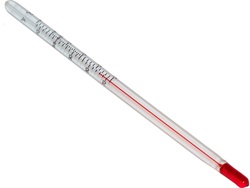
Using a Thermometer
A more accurate way to measure temperature is by using a thermometer. A thermometer is the instrument used to tell the air temperature. A thermometer is usually made up of a small, hollow glass tube. At the bottom of the tube is a bulb, which holds a liquid such as alcohol or mercury When there is an increase in heat, the liquid inside the bulb expands, pushing up into the tube. A decrease in heat lets the liquid contract, moving down the tube. A measuring scale is attached to the tube, to give an accurate measurement of heat energy. We visited IPB on Friday, March 4th 2016 to meet the university students who study marine science. During our meeting, they talked about the sea turtles and also has discussion afterwards. Moreover, the students had the chance to see dead baby sea turtles (hatching) that found had been found at Pramuka. Other than that, the speakers also showed an example of sea turtle food which is plant to the students.
|
Web Links for Further Research http://www.homeschoolshare.com/sea_turtles.php http://marinebio.org/oceans/conservation/biodiversity/ http://nationalzoo.si.edu/ConservationAndScience/AquaticEcosystems/SeaTurtles/ - good information on sea turtles from the Smithsonian National Zoological Park http://www.marinebio.com/ - you can search for any marine species and get loads of information from this site http://world-turtle-trust.org/turtletales.html - legends and stories about sea turtles from around the world http://www.onr.navy.mil/focus/ocean/life/turtle1.htm - several pages on the green sea turtle http://www.oceanconservancy.org/site/PageServer?pagename=SEE _turtles _resources - links to information and resources (including a very cool coloring/activity book); this organization seeks to connect tourists to sea turtles to promote and support ongoing efforts to protect sea turtles http://www.cccturtle.org/ sea-turtle-information.php - website for the Caribbean Conservation Corporation and Sea Turtle Survival League - this link takes you to a page entitled “Information on Sea Turtles and Threats to Their Survival” - very good information and photos here http://www.pbs.org/odyssey/odyssey/20021216_log_transcript.html - “A Night With a Nesting Sea Turtle” from PBS’s “The Voyage of the Odyssey” http://www.pbs.org/odyssey/odyssey/20050223_log_transcript.html - “Loggerheads” from PBS’s “The Voyage of the Odyssey” http://www.pbs.org/wnet/nature/turtles/navigate.html - “Voyage of the Lonely Turtle” from PBS; has an exceptionally good photo section on the anatomy of a sea turtle http://galveston.ssp.nmfs.gov/seaturtles/tours/index.html - National Marine Fisheries Service Sea Turtle Facility at the NOAA/NMFS Galveston Laboratory; click on the sea turtles link on the left side for slide show presentations , or click on the kid stuff link on the left side for their sea turtle activity/coloring book http://www.nationalgeographic.com/ngkids/9911/turtle/ - National Geographic Kids—Turtles in Trouble http://www.seaworld.org/infobooks/SeaTurtle/home.html - information on sea turtles from Sea World http://www.seaturtles911.org/conservation/education.htm | ||||
What We Can Do to help sea turtles
|
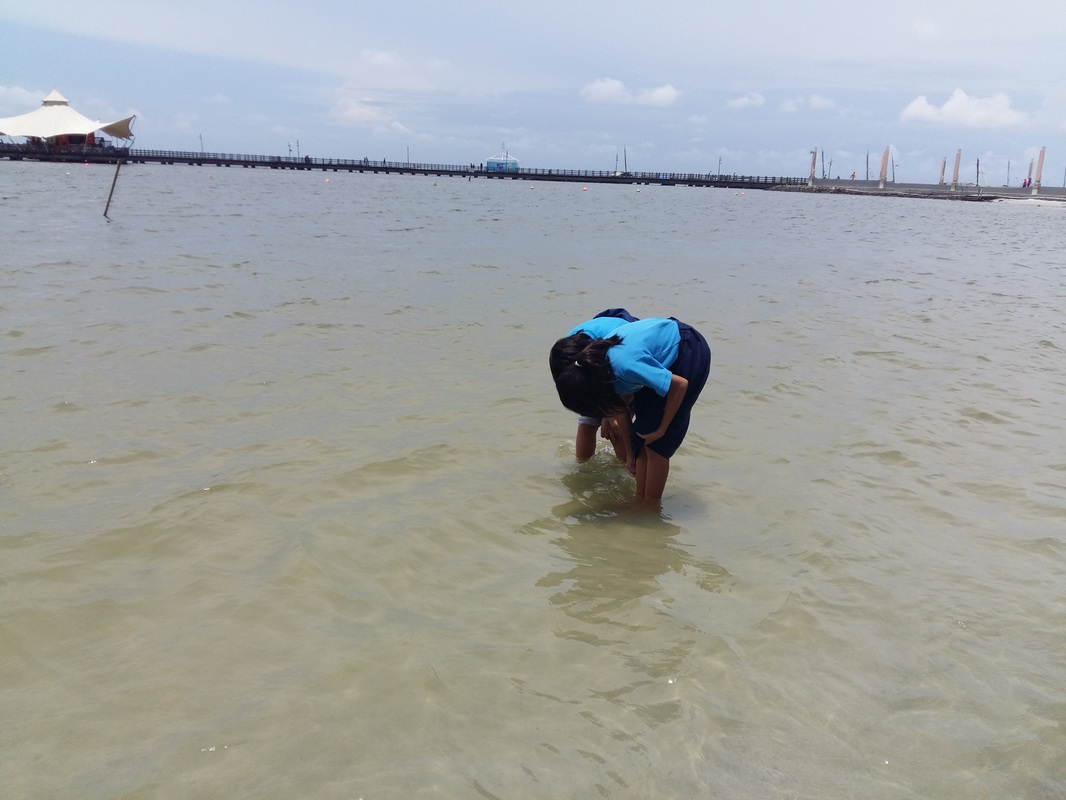
Taking action at Ancol beach by raising awareness related with the issues of sea turtle.
They explained and distributes the leaflet to the life guard and educated based on their research from the species list of sea turtle are being endangered. The students raising awareness that the biggest causes is from the people by littering when they visit the beach and fisherman around. The life guard said " we will report to the government to provide more trash bin, so the people can find easily and a big poster that trashes make a big impact to the species in the ocean. |
|
|
Being a good role model to clean up the beach around from the trash. We promote to minimize using plastic and replace by reusable bag.
By supporting of government's program of "diet kantong plastik." Concerning about plastic trash land to the beach or sea shore, its the most of negative impact toward sea turtle are being extinct. Our responsibility toward marine ecosystem is do simple thing to make a big impact, let's save sea turtles by not littering. |
|
|
|
School community Educated young children at school about the facts of sea turtles; Habitat, kinds of sea turtles, diet, migration, hatching, bio tic and a-bio tic factors that will effect of the sea turtles live and interaction within organism.
Students interested to know the life cycle of sea turtle and reasons/cause what the factors that sea turtle are being endangered. Taking action outside community
Student visited SD 01 Pondok Labu
|
|
|
|
