
Grade 5 Exhibition
  • Home
  • 2014
    • Enforcement Systems in City Cleanliness
    • Drainage City Plan
    • Building Plan in Jakarta
    • Reforestation
    • Trading System: Export and Import
    • Tax Responsibilities
    • Governmental Services in Health
    • Criminal and Safety
    • Natural Disaster Management System
    • Public Transportation System
    • Election System
  • 2015
    • Government Systems >
      • Maritime ; Sovereignty & Illegal fishing
      • Economy: Creative industries
      • Environment : Environmental recovery from natural disaster
      • Health : National health insurance
      • Education : Education as a socialization tool
      • Law ; Law enforcement
    • Biodiversity >
      • Beach ecosystem
      • River ecosystem
      • Mountain ecosystem
      • Marine Ecosystem
      • Rain forest ecosystem
      • Mangrove ecosystem
      • Economic : National Economic development
      • Paddy field ecosystem
  • 2016
    • Sumatran Elephants
    • Sea Turtles
    • Mangrove plant
    • Orang Utan
    • River Insect
    • Butterflies
    • Eatable Food
    • Shark
    • Corals
    • Lutung Jawa
    • Eceng Gondok
    • Palm Oil Plantation
    • Tomcat
    • Sumatran Tiger
  • 2017
    • Habitats of Mosquitoes
    • Relationship between ants and the food types
    • Birds' population
    • Insects as Natural Predators
    • Management system of cats' population
    • Aquaponic
    • Butterfly Population
    • Plants to Break the Stream of Water
    • Varieties of Herbs
    • Urban Farming of Consumable Fish
    • Crushed Fallen Leaves to Germinate Seeds
    • Diseases of Cats
  • 2018
    • Waste management in Jakarta society
    • The use of health-care facilities in Jakarta
    • Child-friendly city
    • Universal design in developing public infrastructures
    • Programs to improve reading habits
    • The roles of schools in minimizing juvenile delinquency
    • National examination as a form of assessment
    • Zoonosis
    • Promoting affordable healthy diet
    • Infectious diseases in urban communities
    • Access to Quality Education for Disadvantaged Families
    • Population growth and availability of resources
  • 2019
    • Government system >
      • Hoax and cyber bullying
      • Government decision making regarding to life below water
      • Government function to protect their citizens
    • Biodiversity >
      • Endangered animals population because of human activities
      • Marine ecosystem
      • Deforestation (Forest ecosystem)
    • Scientific knowledge >
      • Tsunami or natural disaster detector
      • Trash as source of energy
      • Innovate trash management on land
      • Scientific technology to support human activity
      • Climate change (extreme weather)
  • 2020
    • Scientific Knowledge >
      • Technology of Infrastructure Construction
      • Disadvantages of technology to biodiversity
      • Technology to solve industry problem
      • INDONESIAN ORCHID BIODIVERSITY CONSERVATION USING TISSUE CULTURE TECHNIQUES
    • Governmental System >
      • Government's Role toward Plastic Innovation
      • BUMN Roles toward Economic Activity
      • Government Action regarding to Energy Crisis
    • Biodiversity >
      • Taking Action of Climate Emergency
      • Endanger Animal in Ecosystem
      • Animals Evacuation During Natural Disaster
      • The Global Warming Impacts to The Shark Extinction

     Sumatran tiGER

          sAVE mE

Picture
Picture
 SUMATRAN TIGER
(Pantera Tigris Sumatrae)
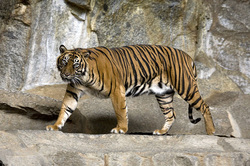
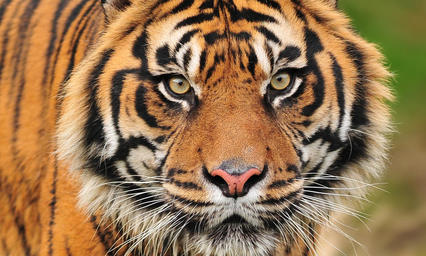
The Sumatran tiger (Panthera tigris sumatrae) is a rare tiger subspecies that inhabits the Indonesian island of Sumatra. It has been listed as Critically Endangered on the IUCN Red List in 2008 as the population was estimated at 441 to 679 individuals, with no subpopulation larger than 50 individuals and a declining trend. (source: https://en.wikipedia.org/wiki/Sumatran_tiger)

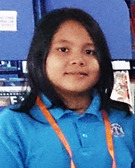
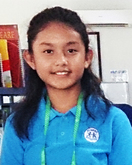
The group

Picture
Tisha
Picture
Dilla
Picture
Feliza
Picture
Fina
Picture
Aziza

Picture
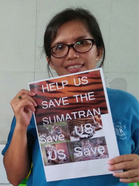
Mentor 1: Ms. Mona
Picture
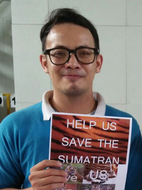
Mentor2: Mr. Didi


Picture

Habitat

Sumatran tigers persist in isolated populations across Sumatra. They occupy a wide array of habitats, ranging from sea level in the coastal lowland forest.
Picture

Threats

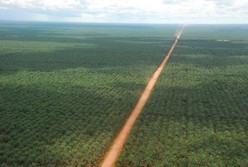
Major threats include habitat loss due to expansion of palm oil plantations and planting of acacia plantations, prey-base depletion, and illegal trade primarily for the domestic market.
Picture

Breeding

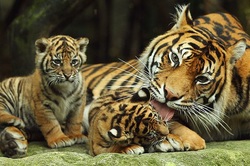
Sumatran Tigers have pregnancy period of about 100 days. They usually give birth to 2-4 tiger cubs.  They are known for their monogamous behavior: they only mate with one species for their whole lives.

field trips

YAYASAN KEHATI

Yayasan Kehati is one of the foundations that have great concern about Sumatran Tiger. They work with WWF among other foundations to keep Sumatran Tigers left in their natural habitat live healthy and well. They do observations in Sumatran national parks and rehabilitation for the wounded Sumatran Tigers that they found.

Picture


Picture
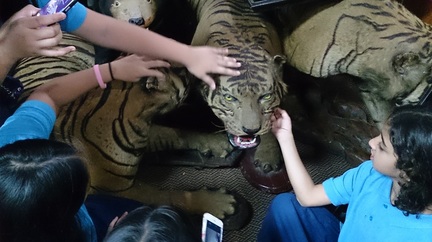
Students observed Sumatran Tiger offsets in BKSDA office in Salemba. Offsets that displayed there are a gift from Indonesia's Internal Affair Minister Tjahjo Kumolo.
BADAN KONSERVASI SUMBER DAYA ALAM
REPUBLIK INDONESIA


Badan Konservasi Sumber Daya Alam (BKSDA) is a government body under the Ministry of Forestry of Republic of Indonesia. Its sole purpose is to prevent the restricted natural resources from being traded illegally. In there, the students learn that Sumatran Tigers' body parts are hot commodities for hunters and illegal traders. The reasons are both aesthetic and medicinal. Their skins are highly priced because of its exotic nature; and their body parts are believed to have medicinal effects. Offsets (tiger skins that attached to wooden flesh and skeletons) are one of the most wanted products.

KEBUN BINATANG RAGUNAN

Ragunan Zoo is one of the most popular destination in South Jakarta. Fortunately, Ragunan Zoo has a collection of no less than 22 species of Sumatran Tiger. In Ragunan, we learn about their habit, their food and interacted directly with the smallest tigers in the world.
Accompanied by the tiger cage zookeeper, Mr. Budi and Mrs. Maya from the Ragunan Zoo office, we tried to fed them with raw chickens and they loved it.

Picture
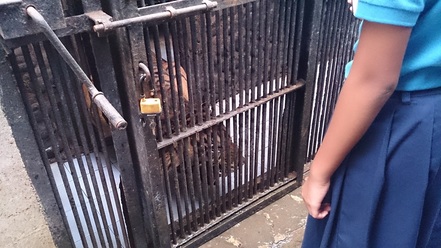
One of the Ragunan Zoo's collection is held behind bars.

Picture

WORLD WILDLIFE FOUNDATION

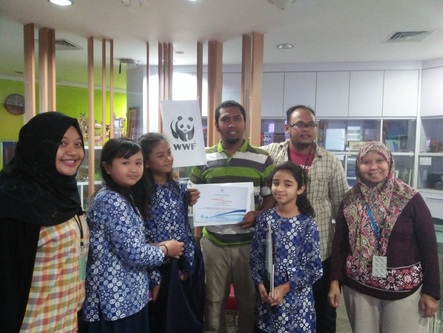
The World Wildlife Foundation or commonly known as WWF is a foundation that not only showing great care and action to Sumatran Tigers, but also any endangered species in the world.
The staffs at WWF greeted us with a warm welcome and shared some great and useful information for us about what they do to keep species this planet safe and sound.
By visiting there, we learned about what real actions that we can do to help Sumatran Tigers sustain their life in this world.

ACTION

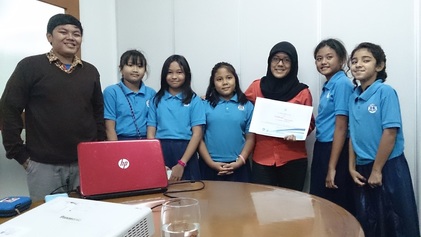
After we learn the facts about what made Sumatran Tiger is in danger, we decided to focus our action in a specific location where people who wants to know about the species would flock: the Sumatran Tiger section in Ragunan Zoo.
We started at 8 in the morning to inform visiting tourists about the facts. We also give them some souvenirs in change of their promise to do something, even the littlest thing to help Sumatran Tiger. The easiest thing that people can do to help is by avoiding to purchase any products that made of Sumatran Tiger's body parts.
People are suspicious in the beginning, suspecting the students wanted to sell something or ask for donations, but after a while they realized that the girls only wanted them to know and act to save our lovely big cat species.

Powered by Create your own unique website with customizable templates.
  • Home
  • 2014
    • Enforcement Systems in City Cleanliness
    • Drainage City Plan
    • Building Plan in Jakarta
    • Reforestation
    • Trading System: Export and Import
    • Tax Responsibilities
    • Governmental Services in Health
    • Criminal and Safety
    • Natural Disaster Management System
    • Public Transportation System
    • Election System
  • 2015
    • Government Systems >
      • Maritime ; Sovereignty & Illegal fishing
      • Economy: Creative industries
      • Environment : Environmental recovery from natural disaster
      • Health : National health insurance
      • Education : Education as a socialization tool
      • Law ; Law enforcement
    • Biodiversity >
      • Beach ecosystem
      • River ecosystem
      • Mountain ecosystem
      • Marine Ecosystem
      • Rain forest ecosystem
      • Mangrove ecosystem
      • Economic : National Economic development
      • Paddy field ecosystem
  • 2016
    • Sumatran Elephants
    • Sea Turtles
    • Mangrove plant
    • Orang Utan
    • River Insect
    • Butterflies
    • Eatable Food
    • Shark
    • Corals
    • Lutung Jawa
    • Eceng Gondok
    • Palm Oil Plantation
    • Tomcat
    • Sumatran Tiger
  • 2017
    • Habitats of Mosquitoes
    • Relationship between ants and the food types
    • Birds' population
    • Insects as Natural Predators
    • Management system of cats' population
    • Aquaponic
    • Butterfly Population
    • Plants to Break the Stream of Water
    • Varieties of Herbs
    • Urban Farming of Consumable Fish
    • Crushed Fallen Leaves to Germinate Seeds
    • Diseases of Cats
  • 2018
    • Waste management in Jakarta society
    • The use of health-care facilities in Jakarta
    • Child-friendly city
    • Universal design in developing public infrastructures
    • Programs to improve reading habits
    • The roles of schools in minimizing juvenile delinquency
    • National examination as a form of assessment
    • Zoonosis
    • Promoting affordable healthy diet
    • Infectious diseases in urban communities
    • Access to Quality Education for Disadvantaged Families
    • Population growth and availability of resources
  • 2019
    • Government system >
      • Hoax and cyber bullying
      • Government decision making regarding to life below water
      • Government function to protect their citizens
    • Biodiversity >
      • Endangered animals population because of human activities
      • Marine ecosystem
      • Deforestation (Forest ecosystem)
    • Scientific knowledge >
      • Tsunami or natural disaster detector
      • Trash as source of energy
      • Innovate trash management on land
      • Scientific technology to support human activity
      • Climate change (extreme weather)
  • 2020
    • Scientific Knowledge >
      • Technology of Infrastructure Construction
      • Disadvantages of technology to biodiversity
      • Technology to solve industry problem
      • INDONESIAN ORCHID BIODIVERSITY CONSERVATION USING TISSUE CULTURE TECHNIQUES
    • Governmental System >
      • Government's Role toward Plastic Innovation
      • BUMN Roles toward Economic Activity
      • Government Action regarding to Energy Crisis
    • Biodiversity >
      • Taking Action of Climate Emergency
      • Endanger Animal in Ecosystem
      • Animals Evacuation During Natural Disaster
      • The Global Warming Impacts to The Shark Extinction