Grade 5 Exhibition
  • Home
  • 2014
    • Enforcement Systems in City Cleanliness
    • Drainage City Plan
    • Building Plan in Jakarta
    • Reforestation
    • Trading System: Export and Import
    • Tax Responsibilities
    • Governmental Services in Health
    • Criminal and Safety
    • Natural Disaster Management System
    • Public Transportation System
    • Election System
  • 2015
    • Government Systems >
      • Maritime ; Sovereignty & Illegal fishing
      • Economy: Creative industries
      • Environment : Environmental recovery from natural disaster
      • Health : National health insurance
      • Education : Education as a socialization tool
      • Law ; Law enforcement
    • Biodiversity >
      • Beach ecosystem
      • River ecosystem
      • Mountain ecosystem
      • Marine Ecosystem
      • Rain forest ecosystem
      • Mangrove ecosystem
      • Economic : National Economic development
      • Paddy field ecosystem
  • 2016
    • Sumatran Elephants
    • Sea Turtles
    • Mangrove plant
    • Orang Utan
    • River Insect
    • Butterflies
    • Eatable Food
    • Shark
    • Corals
    • Lutung Jawa
    • Eceng Gondok
    • Palm Oil Plantation
    • Tomcat
    • Sumatran Tiger
  • 2017
    • Habitats of Mosquitoes
    • Relationship between ants and the food types
    • Birds' population
    • Insects as Natural Predators
    • Management system of cats' population
    • Aquaponic
    • Butterfly Population
    • Plants to Break the Stream of Water
    • Varieties of Herbs
    • Urban Farming of Consumable Fish
    • Crushed Fallen Leaves to Germinate Seeds
    • Diseases of Cats
  • 2018
    • Waste management in Jakarta society
    • The use of health-care facilities in Jakarta
    • Child-friendly city
    • Universal design in developing public infrastructures
    • Programs to improve reading habits
    • The roles of schools in minimizing juvenile delinquency
    • National examination as a form of assessment
    • Zoonosis
    • Promoting affordable healthy diet
    • Infectious diseases in urban communities
    • Access to Quality Education for Disadvantaged Families
    • Population growth and availability of resources
  • 2019
    • Government system >
      • Hoax and cyber bullying
      • Government decision making regarding to life below water
      • Government function to protect their citizens
    • Biodiversity >
      • Endangered animals population because of human activities
      • Marine ecosystem
      • Deforestation (Forest ecosystem)
    • Scientific knowledge >
      • Tsunami or natural disaster detector
      • Trash as source of energy
      • Innovate trash management on land
      • Scientific technology to support human activity
      • Climate change (extreme weather)
  • 2020
    • Scientific Knowledge >
      • Technology of Infrastructure Construction
      • Disadvantages of technology to biodiversity
      • Technology to solve industry problem
      • INDONESIAN ORCHID BIODIVERSITY CONSERVATION USING TISSUE CULTURE TECHNIQUES
    • Governmental System >
      • Government's Role toward Plastic Innovation
      • BUMN Roles toward Economic Activity
      • Government Action regarding to Energy Crisis
    • Biodiversity >
      • Taking Action of Climate Emergency
      • Endanger Animal in Ecosystem
      • Animals Evacuation During Natural Disaster
      • The Global Warming Impacts to The Shark Extinction

access to quality education for disadvantaged FAMILIES

Unit of Inquiry: How We Organize Ourselves (An inquiry into the interconnectedness of human-made systems and communities; the structure and function of organizations; societal decision-making; economic activities and their impact on humankind and the environment)
Central Idea: Government systems influence the lives of citizens
Related Concepts: Equality, citizenship, governance, law and politics

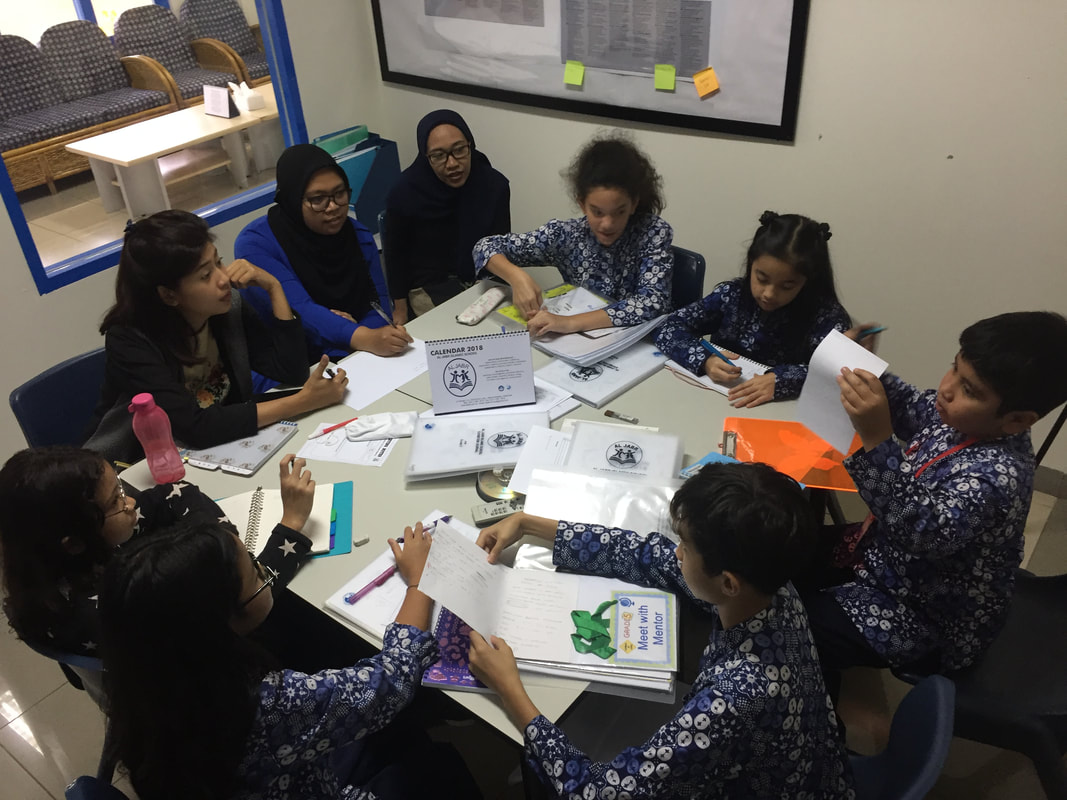
the Mentors and the students

Lines of inquiry

  • How government systems function
  • How decision-making practices reflect human rights
  • Impact of government on citizens
  • The rights and responsibilities of citizenship

Transdisciplinary skills

Time management skill
Communication skill
​Research skill

social strands

Social organization and culture:
The study of people, communities, cultures and societies; the ways in which individuals, groups and societies interact with each other

INItiated action

Visit and help the children who cannot go to school due to the lack of government support.

exploring, wondering, and questioning

Picture
Picture
Picture
By discussing with the mentors, the students formulated and asked questions about the related topics. They talked over the possible real-life issues or problems to be investigated and came up to these questions during inquiry cycle.​
  • Why some of the poor people don't get the education they need?
  • How does the government fund the subsidy program?
  • How can the disadvantaged people get Kartu Indonesia Pintar or Kartu Jakarta Pintar subsidy?
  • Why are there still certain people who are eligible for Kartu Indonesia Pintar or Kartu Jakarta Pintar but cannot receive the subsidy?
  • What will happen if disadvantaged families doesn't get the Kartu Jakarta Pintar subsidy?
  • Is the monthly allowance provided through the subsidy enough for the cardholders to support their study?

researching and seeking information

During this stage, the students investigated the issues using the mind-map and Know-Want to Know-Learn chart. They found out about the vocabularies and keywords and elaborate to support their data.
  • Education: teaching and learning in school or college
  • Quality: the extent to which something is good or bad
  • Family: parents and children, sometimes including their grandchildren
  • Money: a means of payment, especially coins or paper notes
  • Disadvantaged: not having things, for example education or money
  • Disability: any continuing condition that restricts everyday activities, a physical or mental condition that limits a person's movements, senses, or activities
  • Access: the right or opportunity to do something or see someone
  • Poverty
They also explored about the Kartu Indonesia Pintar and Kartu Jakarta Pintar, discovered informations and gathered them into 5W and 1H chart.


collecting data and reporting findings 

FIELD TRIPS TO SDN PONDOK LABU 13 AND KELURAHAN KEBAGUSAN

Reflection after field trip to SDN Pondok Labu 02 Pagi and Kelurahan Kebagusan
Picture
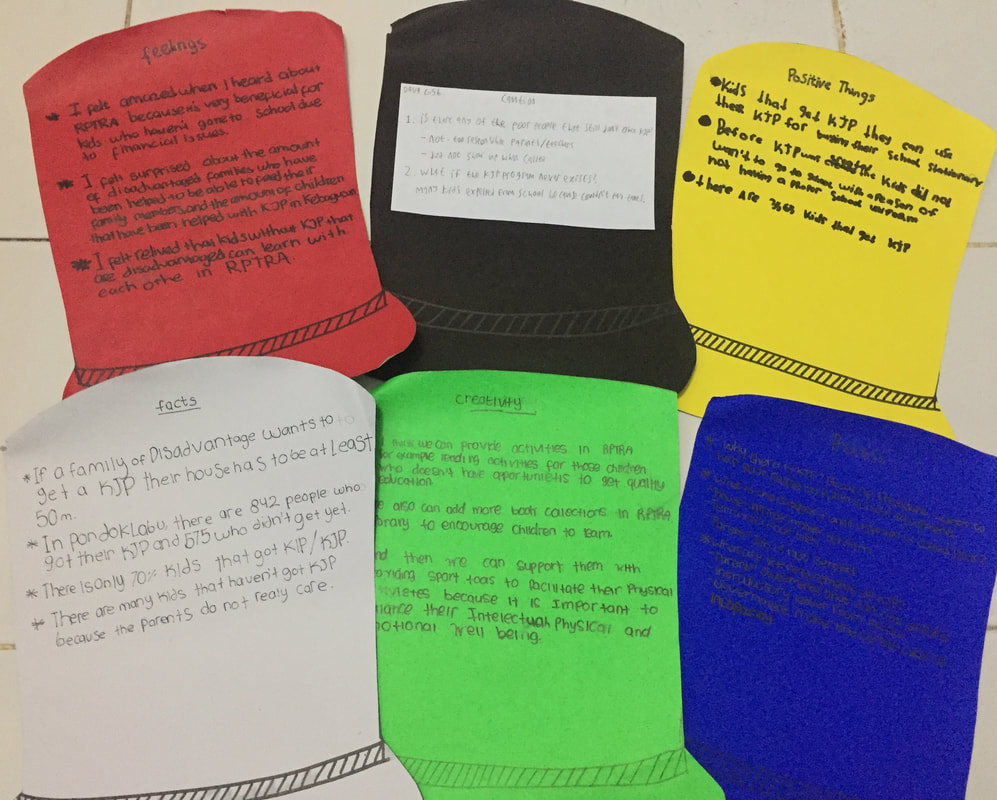
6 THINKING HATS
White Hat (Facts)
  1. If a family of disadvantaged children wants to get KJP subsidy, their house must be at least 50 sqm.
  2. In Pondok Labu, there are 842 children who have got KJP subsidy and 575 children who haven't got it yet.
  3. There is only 70% children who got KJP or KIP subsidy.
  4. There are many children who haven't got the KJP subsidy because their parents are reluctant with the requirements.
Black Hat (Negative things)
  1. There is still some of the disadvantaged people who still don't get KJP subsidy because they didn't come when they're called by the school and aren't responsible with the administrative documents. 
  2. If the KJP program doesn't exist, there will be a lot of students expelled from school because their parents couldn't afford to pay school tuition. 
Red Hat (Feeling)
  1. I felt amazed when I heard about RPTRA because it is very beneficial for children who haven't gone to school due to financial issues.
  2. I felt surprised about the amount of disadvantaged families who have been helped to be able to feed their family members and the amount of children who have been helped with KJP program in Kelurahan Kebagusan.
  3. I felt relieved that children without KJP subsidy can learn together in RPTRA Kecapi. 
Yellow Hat (Positive things)
  1. KJP subsidy can be used to buy school stationaries. 
  2. Before KJP existed, a lot of children wouldn't go to school because they didn't have proper uniform.
  3. There are 3565 children who got KJP subsidy. 
Blue Hat (Process)
  1. KJP program exists because the presidents wants to help disadvantaged people to fulfill school equipments.
  2. Category of disadvantaged people are; their house is approximately 50 sqm, their house terrazzo floor is made of tiles, and their parents' job is not settled.​
  3. The requirements of KJP subsidy are; statement letter from parents telling that they can't afford the school fees, statement letter from RT or RW chief, and statement letter from kelurahan. 
Green Hat (Creativity)
  1. I think we can provide activities in RPTRA, for example reading activities for those children who doesn't have opportunities to get quality education.
  2. We can also add more books collection in RPTRA library to encourage children to learn independently.
  3. And then, we can support them with providing sport tools to facilitate their physical activities because it is important to balance their intellectual, physical, and emotional well-being.

Experimenting and playing with possibilities

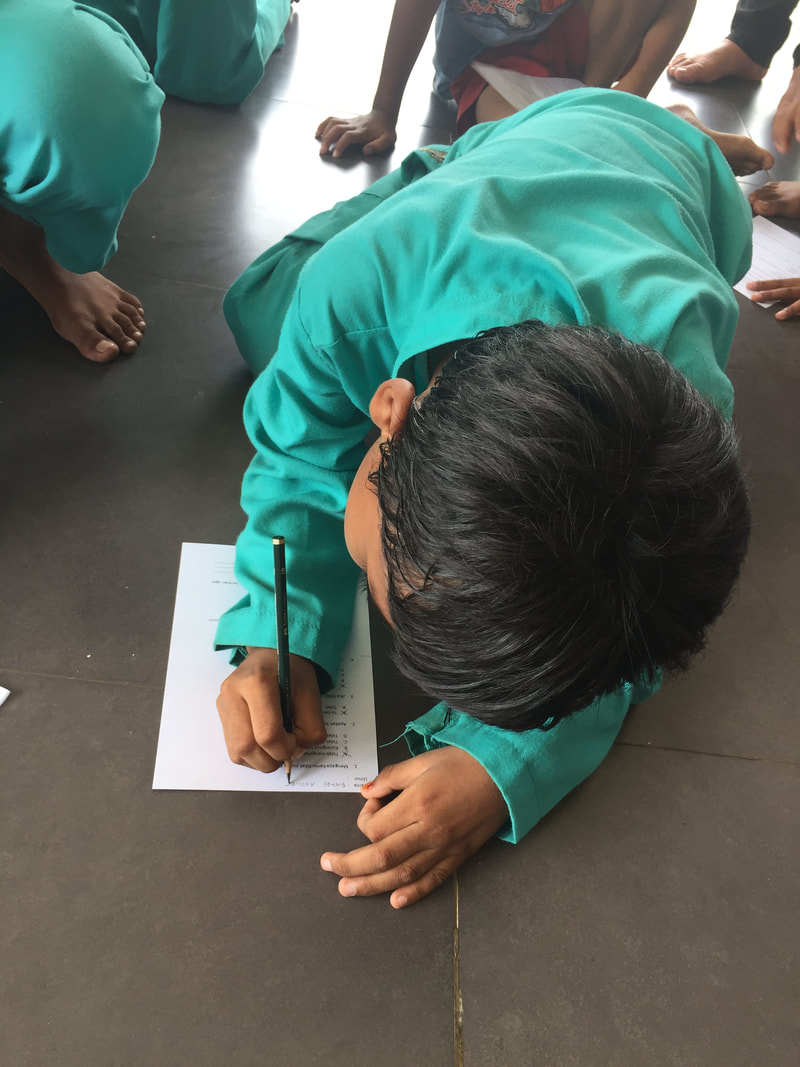
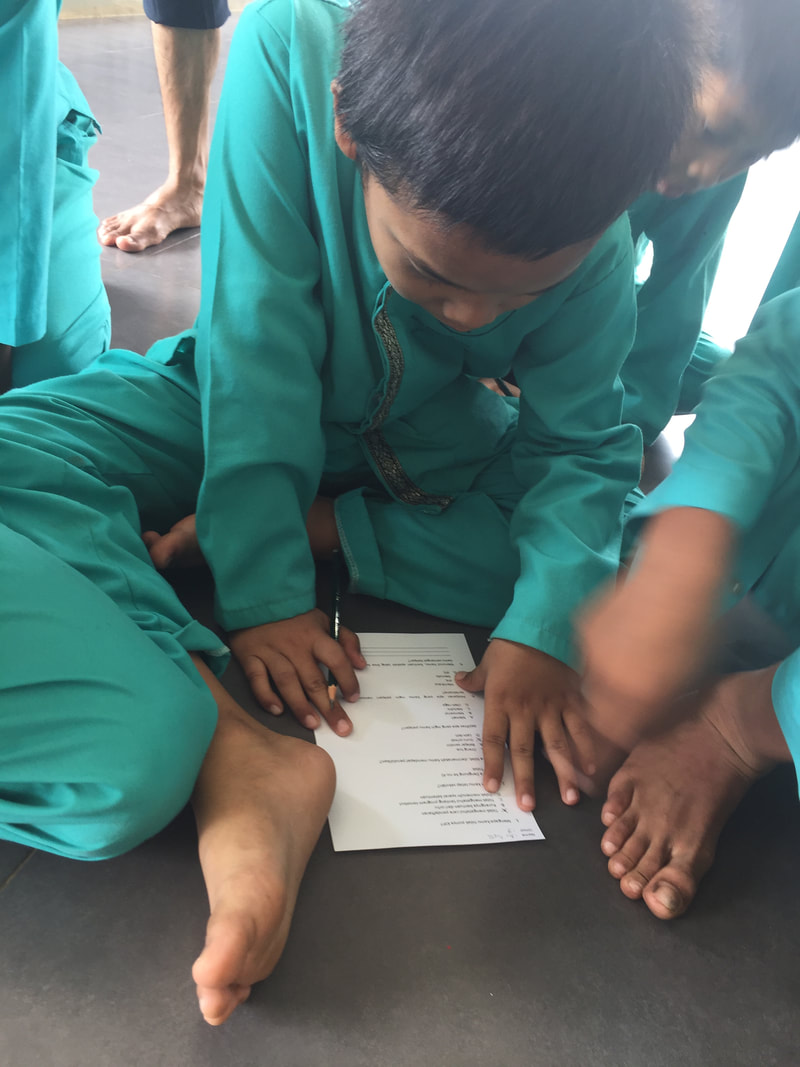
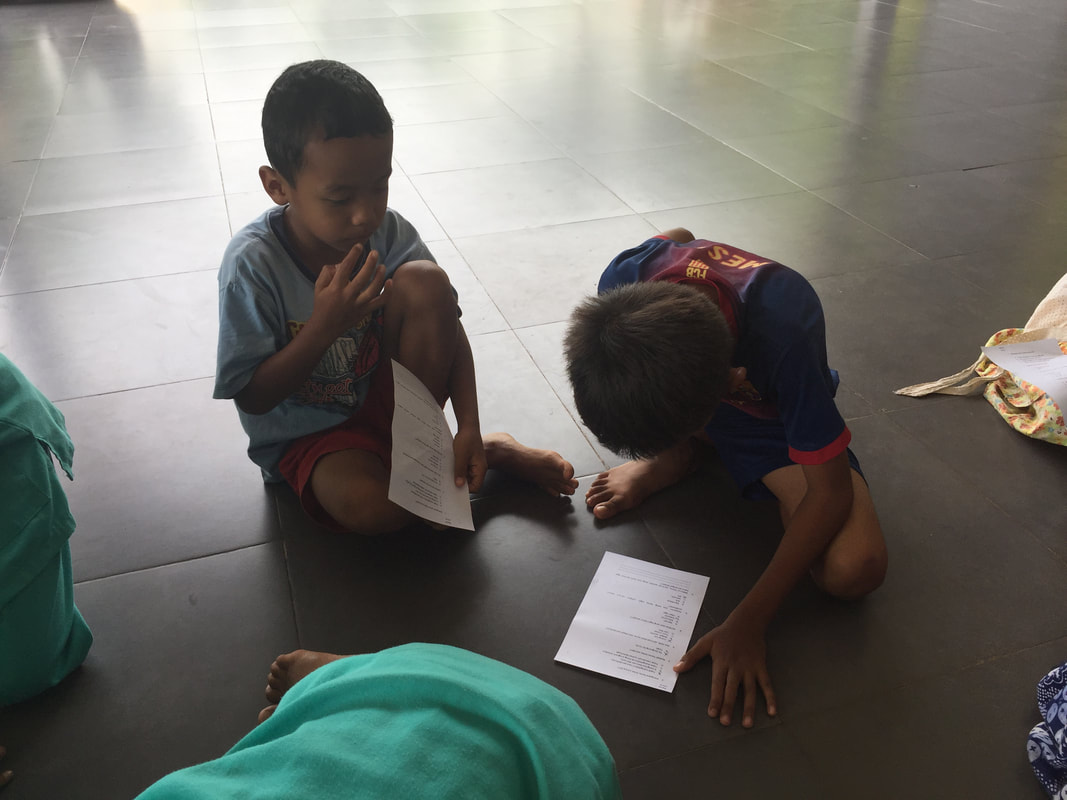
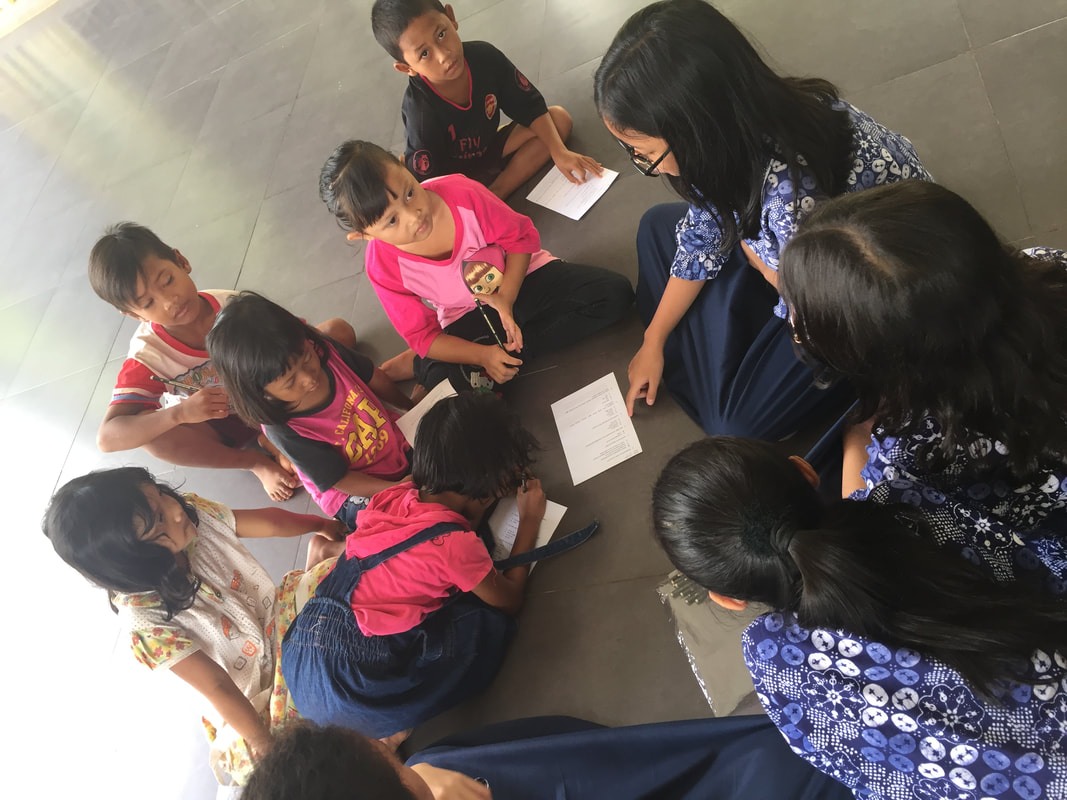
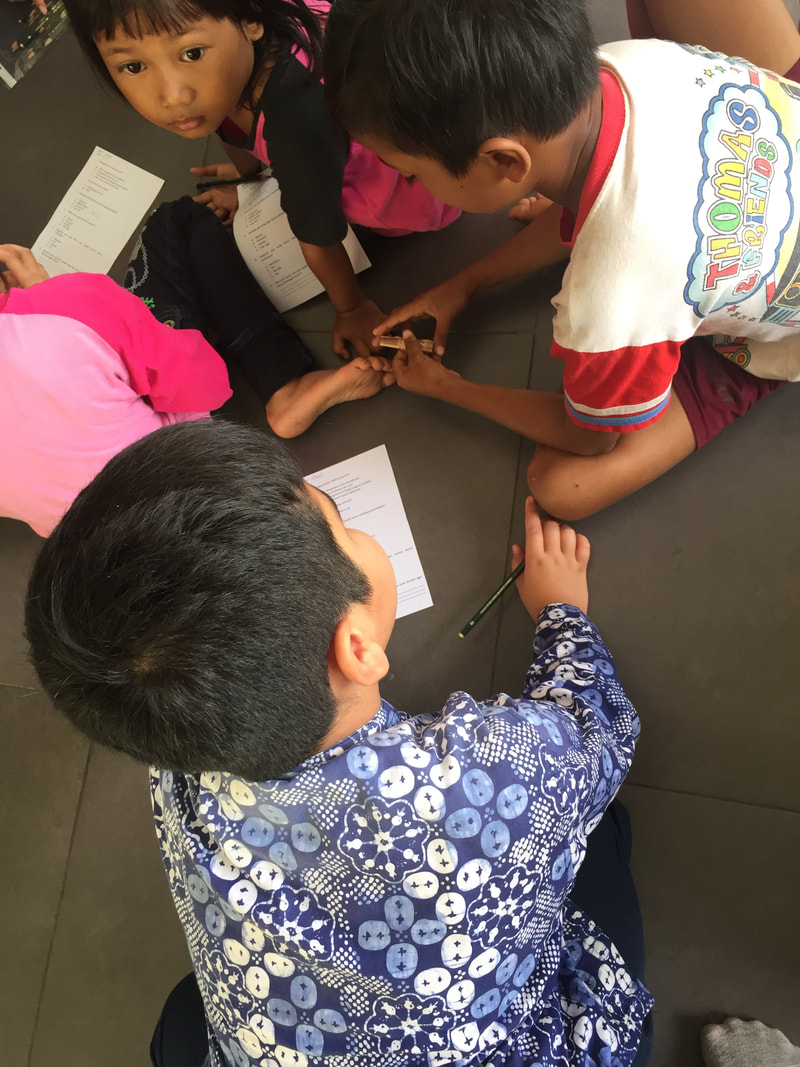
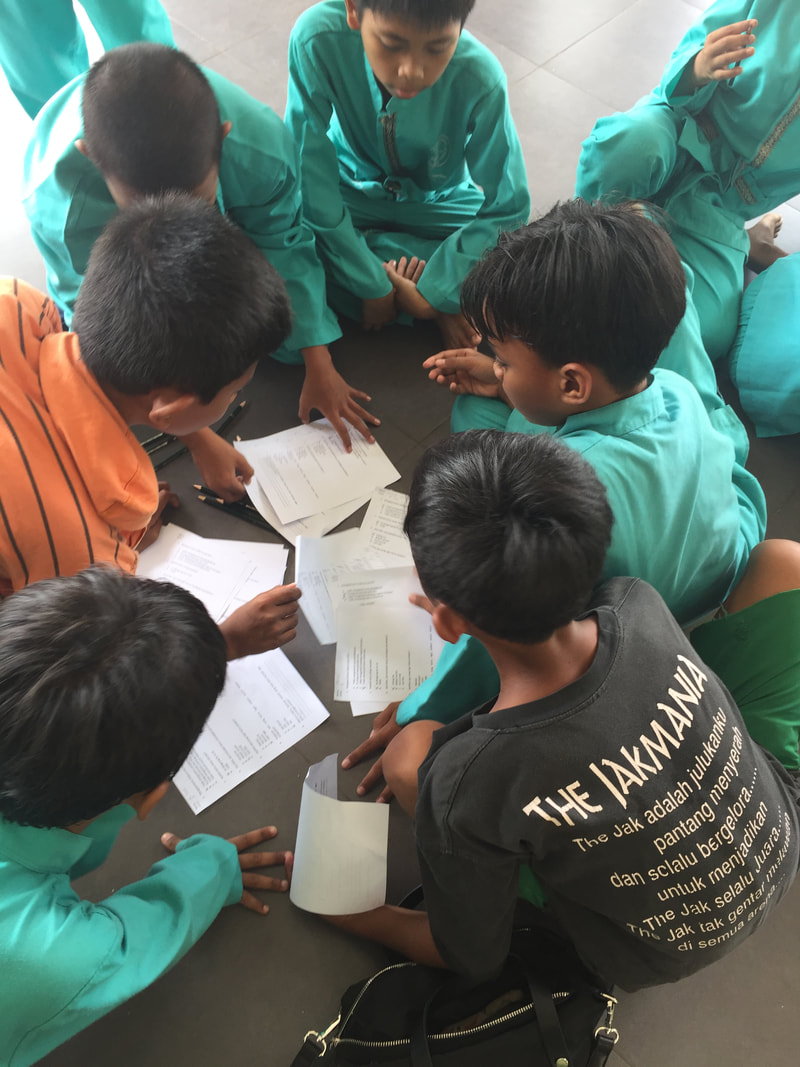
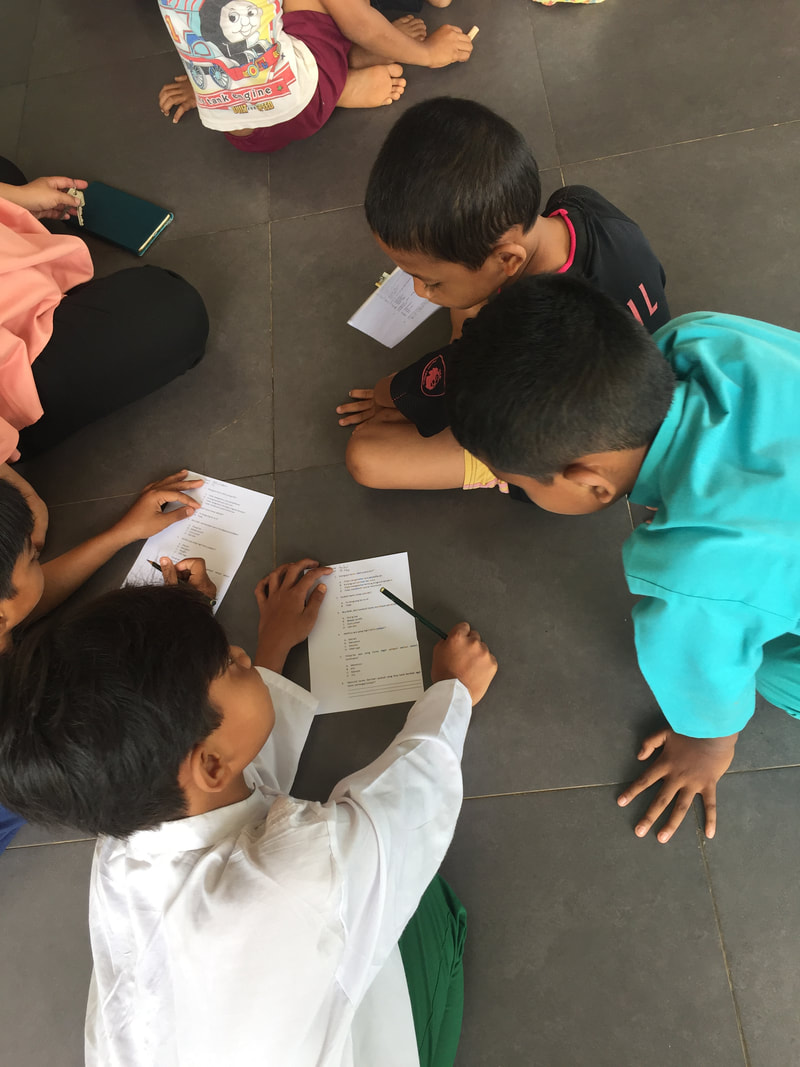
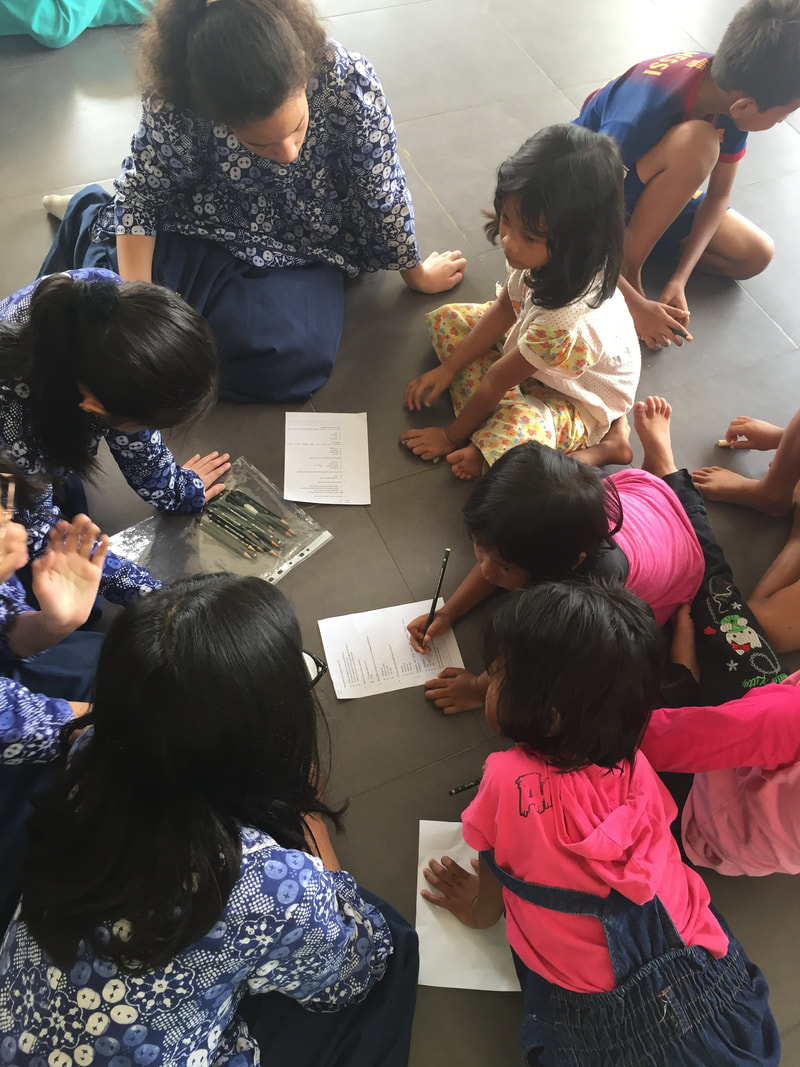
I. At this stage, the students are planning to gather data through questionnaire for children who haven't had Kartu Jakarta Pintar subsidy. They went on a field trip on Friday, 23rd March 2018 to RPTRA Kecapi, Jagakarsa. 
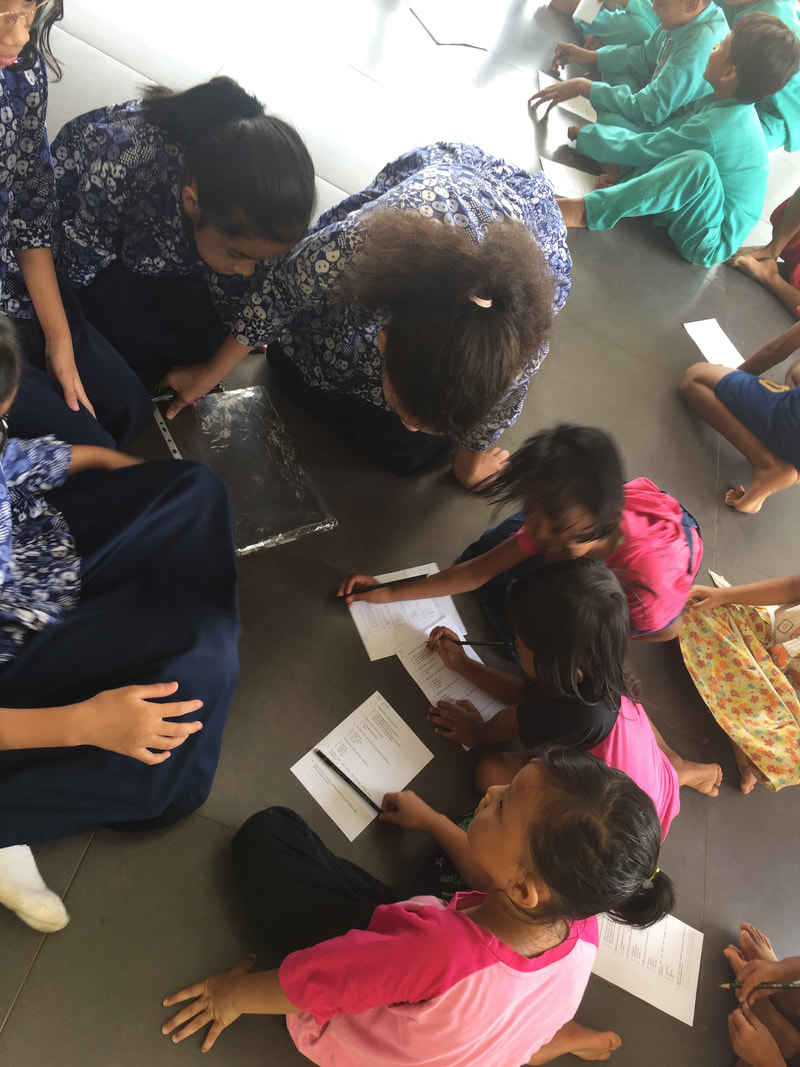
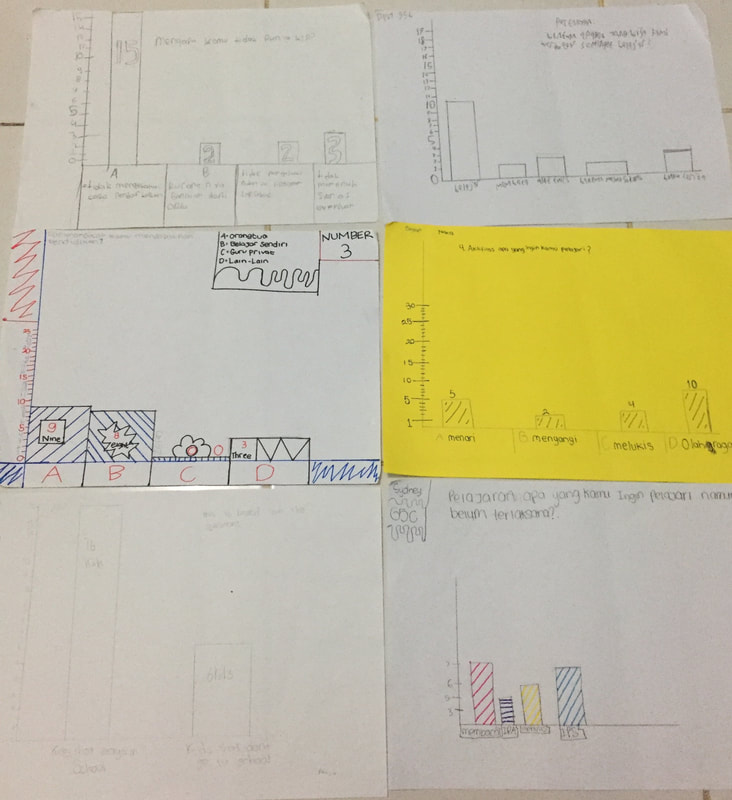
From the questionnaire gathered in the field trip, the students made a bar graph for each question.
Questionnaire result: (from 20 respondents)

Why didn't you get the KJP subsidy?
  • 15 children answer that they didn't know the procedure.
  • 2 children answer that their parents didn't get the help.
  • 2 children answer that they didn't know the program.
  • 3 children answer that they couldn't fulfill the requirement.
Are you going to school?
  • 16 children answer yes.
  • 4 children answer no.
Where do you get the education?
  • 9 children answer from parents.
  • 8 children answer by themselves.
  • None of the children answer from private teacher.
  • 3 children answer from other resources.
What subject do you want to learn? (This question can be answered more than one options.)
  • 7 children answer reading.
  • 5 children answer science.
  • 6 children answer reading.
  • 7 children answer social studies.
Picture
What activities do you want to learn? (This question can be answered more than one options.)
  • 5 children answer dancing.
  • 2 children answer singing.
  • 4 children answer painting.
  • 10 children answer sports.
What kind of help do you need to motivate you to learn?
  • 10 children answer help to study.
  • 1 child answer help to read.
  • 2 children answer stationaries help.
  • 1 child answer help to register to school.
  • 2 children answer reading books.
II. Fund Raising for Action

DEEPENING UNDERSTANDING THROUGH THE APPLICATION OF A CONCEPT

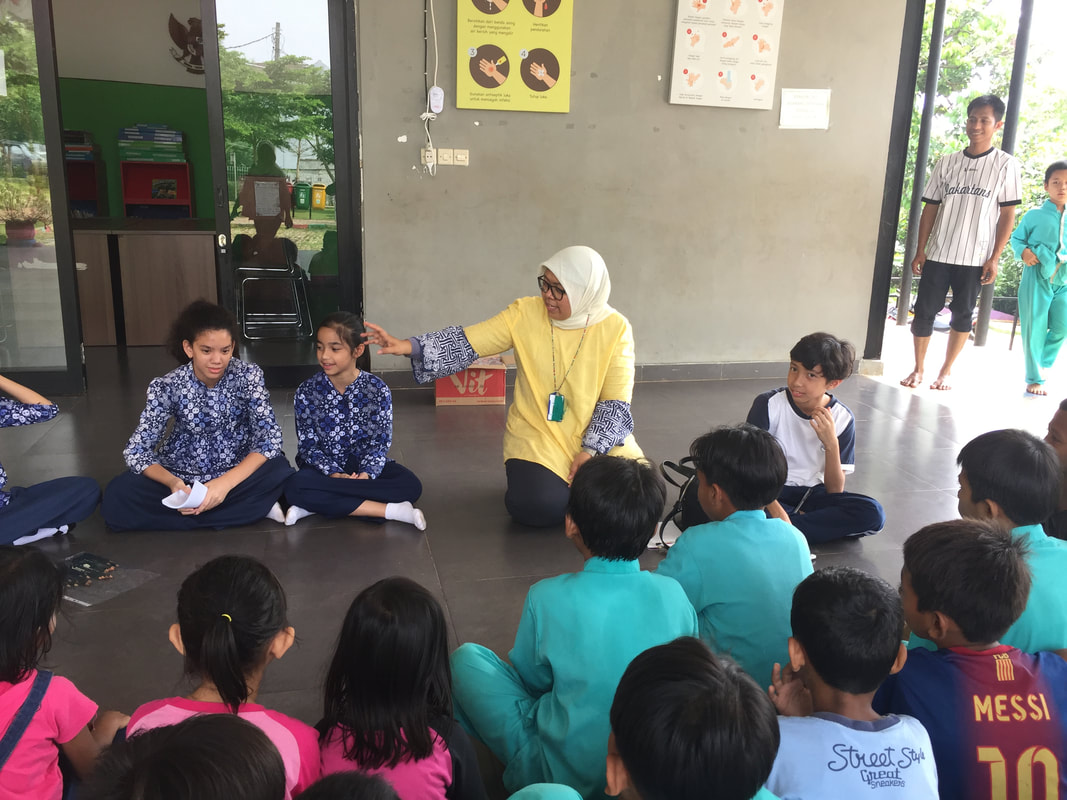
After interviewing Ibu Bur from Kelurahan Kebagusan and analyzing the questionnaires result from children at RPTRA Kecapi, we decided to do our action at RPTRA Kecapi on Thursday, 12th April 2018. Our purposes are to create awareness about the activities in RPTRA, motivate children to go to school, and support children at school. Therefore, we made a poster about the activities schedule, held a puppet show and a science experiment show, and distributed stationaries to the children. 

reflections

During our research, we got a lot of information about Kartu Jakarta Pintar and how it helps children to get quality informal education. We find out that some children couldn't get the subsidy because of administration problems. However, the existence of RPTRA (Ruang Publik Terbuka Ramah Anak) has helped children to get better informal education. We hope our action can help people to be more aware to participate in improving quality education. 

Powered by Create your own unique website with customizable templates.